

Omega-3 for Dogs: 2026 Guide to Itchy Skin Relief

What if the answer to omega 3 for dogs itchy skin isn’t simply adding more oil to the bowl? Watching your dog scratch through the night is exhausting, and buying supplements that don’t help only adds frustration. The right source matters: dogs use marine EPA and DHA more readily than plant-based ALA, while product quality and a consistent routine matter too. This guide explains how to identify useful sources, discuss dosing with your veterinarian, and build a straightforward routine that supports skin-barrier and coat health.
You’ll also learn what to check for quality, how omega-3s can fit alongside peptides and probiotics in an all-in-one routine, and what realistic progress may look like. Skin and coat benefits often take 4 to 8 weeks of consistent daily use. Omega-3s can support an itch-management plan, but they aren’t a stand-alone cure. Persistent or severe scratching deserves veterinary attention. The goal: fewer flakes, a healthier-looking coat, and more restful nights.
Key Takeaways
- Learn how omega 3 for dogs itchy skin may support the skin barrier, and why EPA and DHA matter.
- Know what to look for in a cold-pressed omega-3 source and why protecting oils from heat and light matters.
- Build a safer routine by checking with your veterinarian first and introducing new fats gradually.
- Explore how AminoPaws Total Health Chews combine omega-3s, peptides, and probiotics. Subscribe and Save locks in the subscription price for 12 months, with free shipping on every order; cancel before the next order is processed.
Why Dogs Itch: How Omega-3 Fatty Acids Support the Skin Barrier
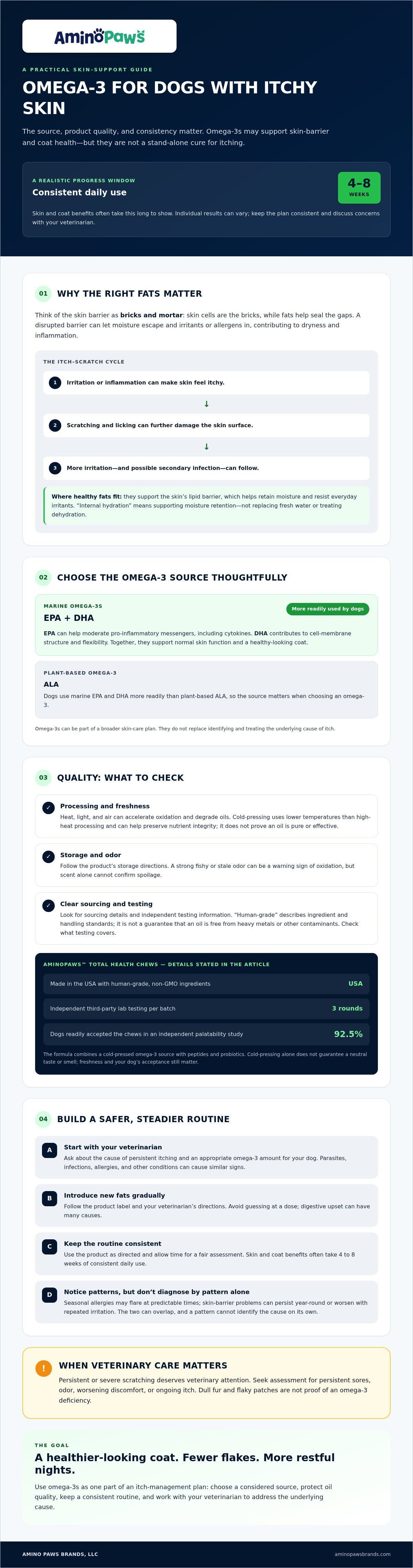
Your dog’s skin barrier is like brick and mortar: skin cells form the “bricks,” while fats between them help seal the gaps. When that barrier is disrupted, moisture escapes and irritants or allergens can get in, contributing to dryness and inflammation. Fatty acids support healthy skin, but dull fur, flaky patches, and persistent scratching aren’t proof of a deficiency. Allergies, parasites, infections, and other conditions can cause similar signs, so ongoing itching deserves a veterinary assessment.
Seasonal allergies may flare at predictable times, such as during pollen seasons. Skin-barrier problems can persist year-round or worsen with repeated irritation, and the two can overlap. A pattern can offer clues, but it can’t identify the cause on its own. Learning how Omega-3 fatty acids work helps explain why the right fats may be useful as part of a broader skin-care plan.
The Role of EPA and DHA in Canine Dermatology
EPA and DHA are marine omega-3s that become part of cell membranes and influence inflammatory signaling. EPA can help moderate the production of pro-inflammatory messengers, including cytokines, making it an important part of the skin-support picture. DHA contributes to cell-membrane structure and flexibility. Together, these fats support normal skin function and a healthy-looking coat. They’re not a substitute for finding and treating the underlying cause of itch.
Breaking the Itch-Scratch Cycle
Inflamed skin feels itchy. Scratching and licking can then damage the surface further, creating opportunities for secondary infection and even more irritation. Healthy fats support the skin’s lipid barrier, helping it hold moisture and resist everyday irritants. Think of “internal hydration” as supporting moisture retention, not replacing fresh water or treating dehydration. For omega 3 for dogs itchy skin, consistency may support skin health, but persistent sores, odor, or worsening discomfort need veterinary care.
The Science of Purity: Why Cold-Pressed Omega-3s Outperform Heat-Processed Oils
Omega-3 oils are delicate. Exposure to heat, light, and air can accelerate oxidation, degrading fats and making an oil rancid. That’s why processing and storage matter, not just the word “omega-3” on the label. Cold-pressing extracts or handles oils at lower temperatures than high-heat processing, helping preserve nutrient integrity. It’s one quality factor to consider for omega 3 for dogs itchy skin, though it doesn’t by itself prove an oil is pure or effective.
A strong fishy or stale odor can be a warning sign of oxidation, but scent alone can’t confirm spoilage. Digestive upset can have many causes, too. Follow the label’s storage directions and check that the manufacturer explains its quality controls. The American Kennel Club’s overview of fish oil for dogs offers more context on its use in canine wellness.
Human-Grade vs. Feed-Grade Ingredients
“Human-grade” describes ingredient and handling standards; it isn’t a guarantee that an oil is free from heavy metals or other contaminants. Look for clear sourcing and independent testing information. AminoPaws™ Total Health Chews are made in the USA with human-grade, non-GMO ingredients. Each batch undergoes three rounds of independent third-party lab testing. Check what a company says its testing covers rather than assuming every test measures the same things.
Cold-Pressed Oils and Palatability
AminoPaws uses a cold-pressed source of Omega-3s to help preserve nutrient integrity in its chews. The formula also combines Omega-3s with peptides and probiotics, offering an all-in-one option instead of juggling individual supplements. In an independent third-party palatability study, 92.5% of dogs readily accepted the chews.* Cold-pressing alone doesn’t guarantee a neutral taste or smell, so pay attention to your dog’s acceptance and the product’s freshness.
Learn about AminoPaws chews and their ingredients. Subscribe and Save locks in the subscription price for 12 months, and free shipping applies to every order. Cancellations must happen before the next order is processed.
Step-by-Step: Restore Your Dog’s Skin with Omega-3s
A steady routine starts with the right plan, not guesswork. Use these steps to approach omega 3 for dogs itchy skin safely and track whether it’s helping.
- Check with your veterinarian. Persistent itching can come from parasites, infection, allergies, or other medical issues. Ask your vet to help identify the cause and recommend an appropriate omega-3 amount for your dog.
- Introduce it gradually. Follow the product label and your veterinarian’s directions. If they approve, starting with half the recommended daily amount and increasing gradually may help your dog adjust to added fats. Stop and seek veterinary advice if concerning digestive signs develop.
- Keep it consistent. Give the chosen amount daily and record missed doses. Skin and coat changes may take 4 to 8 weeks of consistent use, so don’t judge progress after only a few days.
- Track visible changes. Note redness, scratching frequency, flaky areas, and coat condition each week. New coat growth can take time. If symptoms worsen, contact your veterinarian rather than simply increasing the dose.
Ask your veterinarian before combining oral supplements with topical products. VCA Animal Hospitals explains the distinct use of topical omega-3 fatty acids.
Make Daily Use Easier
Getting a picky dog to take a supplement can be its own challenge. In an independent third-party palatability study, 92.5% of dogs readily accepted AminoPaws™ Total Health Chews.* Try offering a chew alongside your dog’s usual meal, or break it into smaller pieces if the label allows. You can also offer it by hand. No need to rely on high-calorie pill pockets.
Think Beyond One Ingredient
Gut health is sometimes called the “second skin” because the gut and immune system interact, but probiotics aren’t a proven stand-alone fix for allergic skin disease. AminoPaws Total Health Chews combine Omega-3s with peptides and probiotics in one routine. Peptides are included as part of the formula; don’t treat them as a replacement for veterinary care. For more background, read this complete guide to dog skin and coat chews.
The AminoPaws™ Advantage: A Smarter Way to Manage Itchy Skin
A skin-support routine doesn’t need to mean a cabinet full of separate supplements. AminoPaws™ Total Health Chews combine a cold-pressed source of Omega-3s with peptides and probiotics in one daily chew. That all-in-one format can make a routine easier to stick with, while supporting more than one aspect of wellness. It’s an option to discuss with your veterinarian as you consider omega 3 for dogs itchy skin, not a substitute for diagnosing the cause of persistent scratching.
Consistency matters for nutritional support, so Subscribe and Save offers a way to keep the routine stocked. The subscription price is locked for 12 months, and FREE SHIPPING applies to every order. Review the order schedule and account terms before subscribing. If you need to cancel, do so before the next order is processed.
Try the Chews First
If you’re unsure whether your dog will accept a chew, the AminoPaws trial pack gives you a way to try the format before settling into a routine. Follow the package directions and introduce it in a familiar, positive setting. FREE SHIPPING applies to every order, including the trial pack.
Choose a Routine That Fits
Dogs differ in size and daily needs, so check the product directions and ask your veterinarian which option and serving amount are appropriate. Avoid choosing a subscription based on a size label alone. The current Founder's Launch Week Sale is described as the lowest price ever offered, with Subscribe and Save available to lock in the subscription price for 12 months. Check the offer details before ordering, and remember that cancellations must happen before the next order is processed.
Build a Skin-Support Routine You Can Stick With
The right omega 3 for dogs itchy skin routine starts with quality, consistency, and a clear understanding of what’s causing the itch. EPA and DHA can support skin health, but persistent scratching may need veterinary attention. Choose a carefully handled source, introduce it as directed, and track changes in your dog’s comfort and coat over time.
If you want a simpler daily option, AminoPaws™ Total Health Chews combine cold-pressed Omega-3s with peptides and probiotics. In an independent third-party palatability study, 92.5% of dogs readily accepted the chews.* Subscribe and Save locks in the subscription price for 12 months, and FREE SHIPPING applies to every order. Remember, cancellations must happen before the next order is processed.
Small, consistent steps can make skin support feel more manageable. With a thoughtful routine and your veterinarian’s guidance, you can help your dog move toward a healthier coat and more comfortable days.
Frequently Asked Questions
How long does it take for Omega-3 to help a dog’s itchy skin?
It can take 4 to 8 weeks of consistent daily use to see skin or coat improvements, including less itching. Results vary, and omega-3s may support skin health without resolving the underlying cause of discomfort. For omega 3 for dogs itchy skin, ask your veterinarian about a suitable product and amount. If your dog’s symptoms worsen or don’t improve, seek veterinary advice rather than increasing the dose yourself.
Can I give my dog human Omega-3 supplements for their skin?
Ask your veterinarian before giving your dog a human supplement. Products made for people may have different concentrations, serving directions, or additional ingredients, and the appropriate amount depends on your dog’s health and diet. Check the label for EPA and DHA amounts, not just total oil. Your veterinarian can help determine whether that product is appropriate or recommend a pet-specific option.
Are there side effects to giving my dog too much Omega-3?
Yes. Too much omega-3 may cause digestive upset, such as loose stools or vomiting, and supplements can be unsuitable for some dogs or interact with medications. Don’t combine products or increase the amount without veterinary guidance. Follow the product directions and your veterinarian’s advice. If your dog develops concerning symptoms after starting a supplement, stop giving it and contact your veterinarian for guidance.
Will Omega-3 help with my dog’s hot spots?
Omega-3 may support skin health, but it won’t treat the cause of a hot spot or reliably resolve an active infection. Hot spots can worsen quickly because licking and scratching further irritate the skin. Contact your veterinarian, especially if the area is spreading, oozing, painful, or has an odor. Your vet can assess the skin and recommend care for the underlying problem.
What is the best source of Omega-3 for dogs with allergies?
Marine sources such as fish, krill, and algae oils provide EPA and DHA, the omega-3 forms dogs can use directly. Plant sources such as flaxseed provide ALA, which dogs convert inefficiently to EPA and DHA. Look for clear amounts of EPA and DHA and transparent quality testing. Ask your veterinarian to help choose a source that fits your dog’s allergies, diet, and health needs.